October Edition of the Crypto Altruists Newsletter
👋Hello, Crypto Altruists!
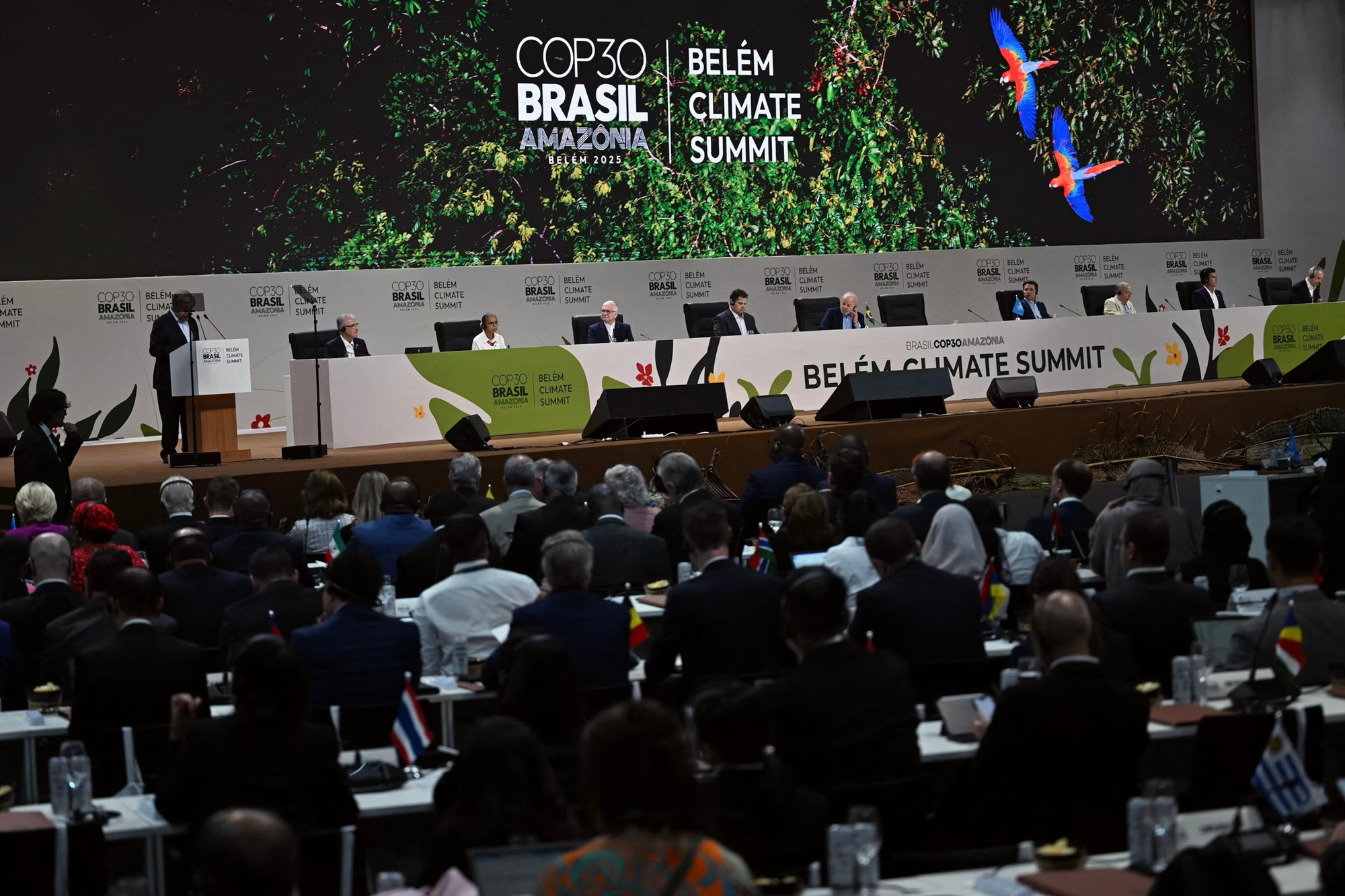
When we read that this year's UN climate summit is being framed around moving "from pledging to proving," our eyes perked up. 👀
There's no wonder proof is kind of our thing. For the past five years, we've been covering stories of people using blockchain to do exactly that: put a promise somewhere public, so anyone can check whether it was kept.
The summit opens in Antalya, Türkiye, on November 9, with delivering on past promises at the top of the agenda. And there's a lot to deliver. Research from IIED found that 93% of climate finance can't be traced to where it ends up, and less than a tenth of what international climate funds commit is directed at the local level, where floods, droughts, and failed harvests hit hardest.
So what would proof look like on the ground?
In March, Gold Standard issued its first carbon credits verified entirely through digital monitoring, each one traceable on a public ledger. The developer can now request new credits every 90 days, instead of waiting up to two years for an auditor.
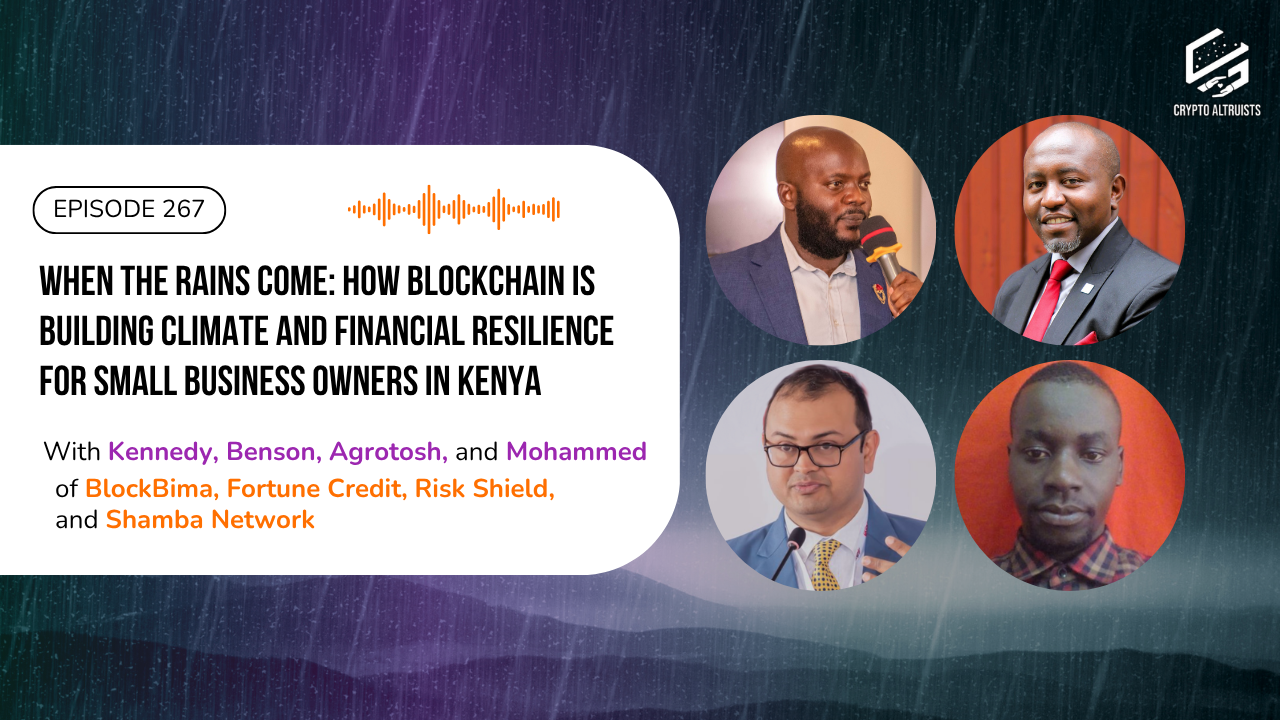
In Kenya, a pilot with BlockBima and Mercy Corps Ventures let satellite data do the proving. When rainfall crossed a set threshold, a smart contract lowered market traders' loan balances automatically, with every payout recorded onchain for the insurer and lender to check. Settlement went from 30 days to one, so the money arrived while the stalls were still flooded. We sat down with all four teams behind it on a recent episode.
And this summer, Ma Earth put a $1 million matching pool behind more than 150 community-led regeneration projects in over 60 countries, with each project's records following it to future funders.
What these have in common is that they make small things cheap to check. Big climate funds struggle to back small projects partly because verifying them costs so much, and when that cost drops, a mangrove nursery or a market stall becomes far easier to say yes to.
Proof has its limits, of course. A ledger can confirm what someone measured, but it can't tell you whether they measured honestly. That gap is what tripped up the first wave of crypto carbon, when credits were put onchain without the registries that vouch for them (we wrote about what came after).
This time, standards bodies like Gold Standard are bringing the technology in themselves. Since they're the ones who decide what counts as a credible measurement, the checking and the public record finally sit in the same place, and that gives us some hope going into COP31. 🌍
Here's what we've been paying attention to this month. 👇
🌱 Featured: We Dug Into AI for Good
Almost every conversation we've had with nonprofit teams lately has drifted toward AI. And the mood in the room is usually some mix of curiosity and unease.
Curiosity, because these tools could take a lot off the plate of overstretched teams. Unease, because so much of the AI story sits badly with why people do this work in the first place: the energy and water behind data centres, the safety risks, and how much power is pooling in a handful of tech companies.
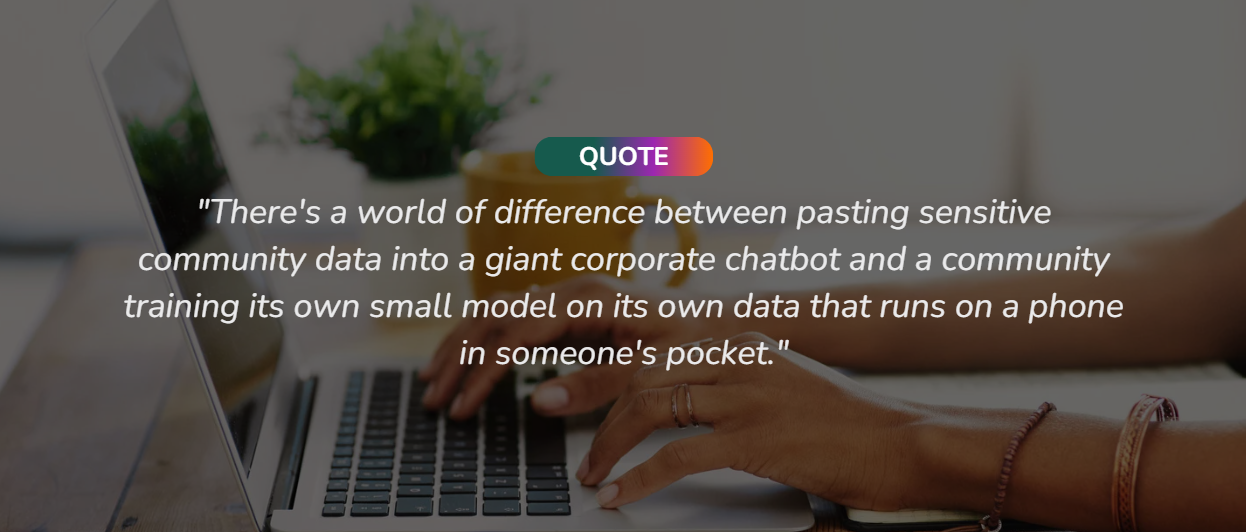
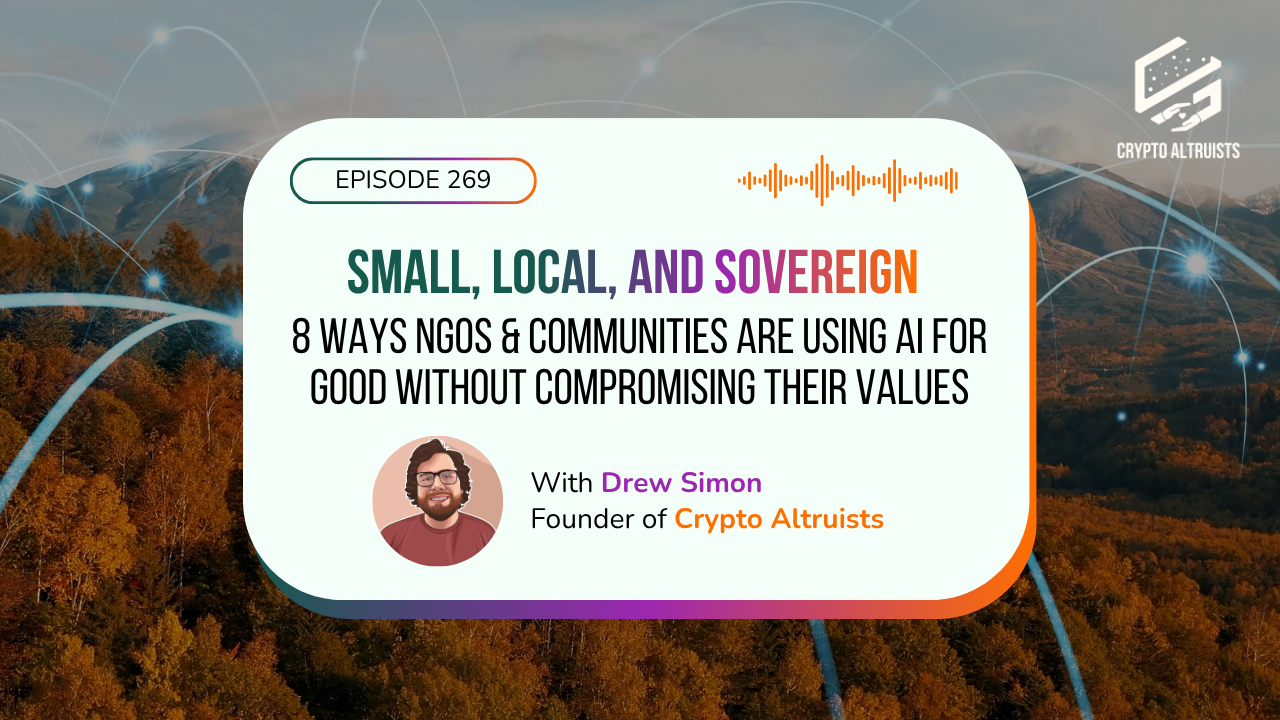
So Drew took the question on in a solo episode. He starts with those concerns and answers them honestly (no sales pitch, we promise), then goes looking for the side of AI that rarely makes headlines: tools that are small, local, and owned by the communities that use them.
If your team is working out its own approach to AI, we help nonprofits write AI policies and find tools that fit their values. Let's talk. 💚
Ecosystem developments 🚀
- Circle Foundation Backs UNDP and WFP to Test Stablecoin Aid Payments: The grants will help UNDP country offices move from small pilots to full programs using regulated stablecoins, and support WFP in building payment routes for conflict zones and low-connectivity regions.
- Cardano Accelerator's New Cohort Focuses on Making Claims Verifiable: Eight ventures are building tools to prove where products come from and what they emit, from vehicle CO2 measured at the source to food labels families can check.
- UN Digital Cooperation Day Gives Blockchain Its Own Session: Ministers from Pakistan and Tanzania joined a discussion on how developing countries could build blockchain into their national digital infrastructure.
- GBBC Releases a "Blockchain for Good" Booklet at UNGA: Six case studies range from WFP's work on food in crisis zones to Regen Network's jaguar credits with Fundación Pachamama, each showing blockchain tied to a UN Sustainable Development Goal.
- Green Goods Publishes an Honest Final Report on Its Regenerative Impact Pilot: Gardeners in Nigeria, Brazil, Kenya, and beyond logged solar, agroforestry, and cleanup work as onchain records, and the team is open about what fell short, concluding that going deep with three gardens beats spreading thin across fourteen.
- Cardano's Project Catalyst Ties Grant Payouts to Proof of Adoption: Its 12 newly selected teams get 40% of funding upfront, with the rest released only as public usage data shows people are using what they built.
- HRF Announces Winners of AI Hack for Freedom III: Activists from Rwanda, Tibet, Turkey, and beyond led teams building tools like an offline AI tutor for Afghan girls barred from school, with every prize paid on-site in Bitcoin.
- ETHGlobal Tokyo Wraps Up With a Wave of Projects on Keeping AI Agents Accountable: Many teams built safeguards for AI agents that spend money, from spending limits to approval from a verified human before large payments, alongside tools like phone-to-phone stablecoin payments.
- Gitcoin's Reboot Gets a Name: Techne: The new project aims to help people pull time, money, and attention back from AI toward their own communities, starting with a local events app and a local money pilot where quadratic funding will live, with launch targeted for mid-December.
Crypto Altruists content & updates 💚
- 🎙️ Crypto Altruists Episode 268: From World Records to a Billion Trees: Guinness World Record mangrove planter Jimi Cohen of Treegens on rewarding people for planting trees instead of asking them to volunteer, and the AI counting tools that make sure no tree gets counted twice.
- 🎙️ Building for Good with G$ Episode 2: Reimagining DAO Governance: Sam McCarthy on how GoodDollar is rebuilding GoodDAO with its community instead of for it, from a collaborative governance hackathon to the new House of Alignment for funding public goods.
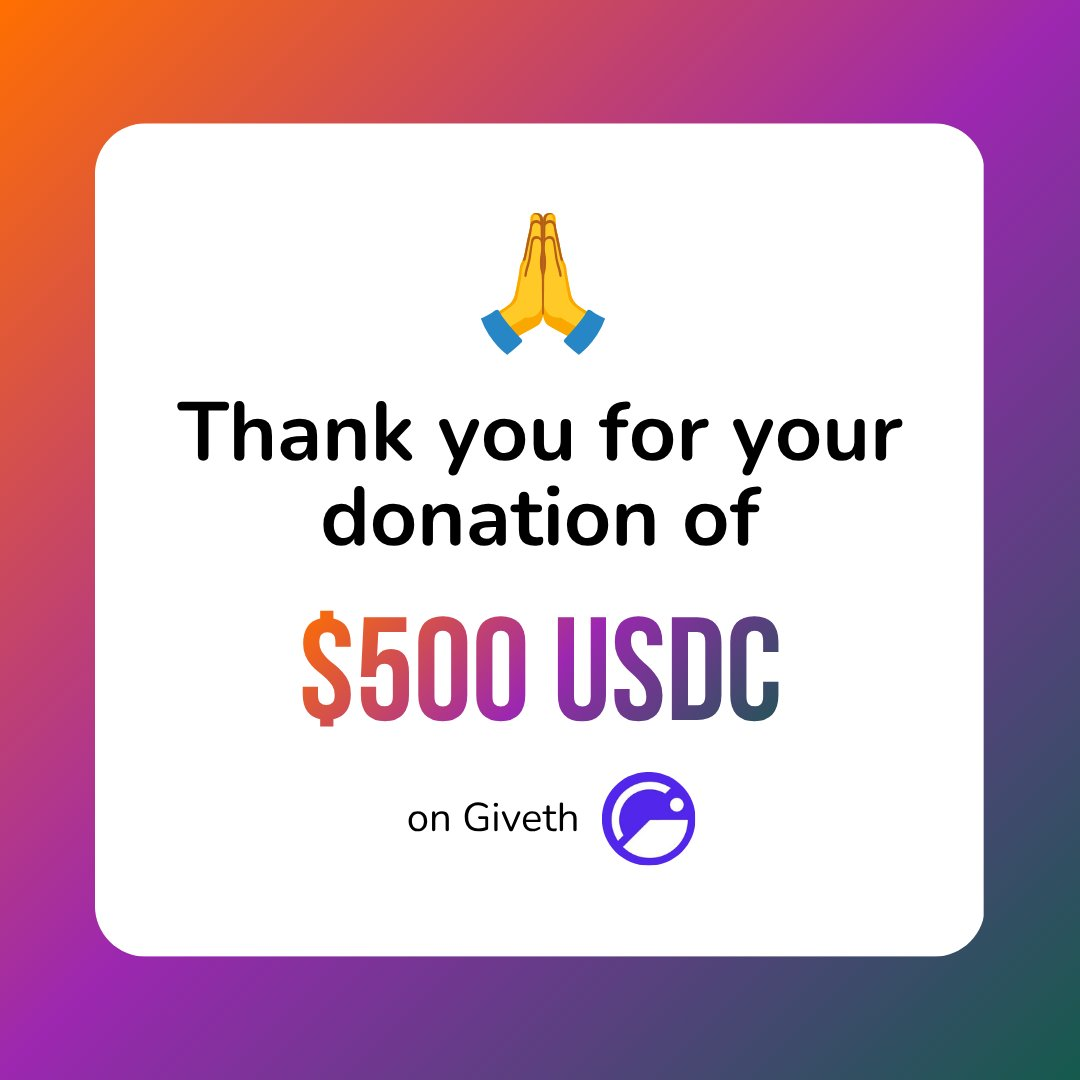
- 💚 A Thank You to Our Anonymous Donor: Someone in our community donated 500 USDC to Crypto Altruists on Giveth, which helps keep the podcast and platform going so we can keep onboarding changemakers to web3. We don't know who you are, but we're so grateful!
Insightful resources 📖
- Why Humanitarians See Potential in Stablecoins: A balanced look at stablecoin aid in Haiti, Afghanistan, and Sudan, where practitioners describe it as a last resort for places banks won't reach, alongside the privacy risks of putting payments on a public ledger.
- Chainalysis 2026 Global Crypto Adoption Index: Crypto's market value halved this year, yet everyday use barely dipped, as cross-border stablecoin payments of a few thousand dollars, the size of a supplier invoice or money sent home, kept growing, with Brazil and Nigeria among the top three countries.
- Regeneration in Action in Nigeria: How the first Regenerators gathering in West Africa came together with a community restoring eroded land through indigenous knowledge, despite unequal travel rights and costly cross-border payments.
🌟 Project highlight: Green Goods
For regenerative communities, the hardest part is often proving the work happened, and then connecting that proof to funding. That's the problem Green Goods set out to solve.
Built by the Greenpill Dev Guild, Green Goods helps local groups (called gardens) document work in solar, agroforestry, waste, and education. A gardener logs the work on their phone with a photo, a steward reviews it, and the approved record lands onchain where funders can trust it. It works offline, runs on basic Android phones, and uses a fingerprint instead of a wallet.
One of the most active gardens is the Tech & Sun Hub at Nnamdi Azikiwe University in Awka, Nigeria, a solar-powered space with round-the-clock electricity and Starlink internet. Its team documented the hub going from an empty plot to a working space, and then the workshops held inside it.
In September, Green Goods wrapped up its Arbitrum-funded pilot and shared what it learned. 👇
We have completed a wonderful journey with @arbitrum developing and growing the Green Goods protocol.
— Green Goods (@greengoodsapp) September 16, 2026
Thanks @maxlomu for your support, @arbitrumdao_gov for the funding and all who participated in using the platform.https://t.co/3BdfZhJCFp
The full report is open about the misses. Nobody used the impact certificate feature, since no funder was asking for one, and four of the fourteen gardens never submitted work. So the team is narrowing to three anchor gardens in Awka, Cape Town, and Minas Gerais.
Next up is commitment pooling, the model we explored with Grassroots Economics in August, which Green Goods plans to integrate at the Sustainable Finance hackathon this month. It's also one of the founding members of GoodDollar's House of Alignment, which Sam McCarthy unpacks in our latest G$ episode.
Big climate promises get made in big rooms, but proof often starts with a photo on a phone and a neighbor who vouches for it. 🌱
💡 Bring AI & web3 into your nonprofit's mission
Crypto Altruists works with nonprofits, foundations, and impact teams that want to understand how blockchain and AI can be valuable tools to support their work. We help them develop sound policies and implement pilots around crypto donations, transparency, data analysis, operations, humanitarian cash transfers, and more.
Our consulting and workshops are hands-on, clear, and tailored to your reality. Book a call if you want to explore what makes sense for your work. 🤝
💸 Send a tip in ETH: cryptoaltruists.eth
🤝 Send a tip in BTC, SOL, and other tokens
☕ Buy us a coffee
📬 Stay connected
Subscribe to get Crypto Altruists content delivered directly to your inbox every month. If you'd like to share any feedback or ideas, you can always reach us at partnerships@cryptoaltruists.com & via the social media platforms below!
Twitter | LinkedIn | Bluesky | Instagram | YouTube | Podcast
See you in the next edition! 💚