July Edition of the Crypto Altruists Newsletter
👋Hello, Crypto Altruists!
If you care about community ownership (and if you're reading this, you probably do!), you may have been watching the Ethereum ecosystem this month.
It's renegotiating where power lives, and it's doing it in public.
The Ethereum Foundation, the nonprofit that has stewarded Ethereum's development since the beginning, cut 20% of its staff and 40% of its budget in June.
From what we can tell, the EF is shrinking on purpose. It's narrowing its focus to core values like censorship resistance and privacy, and it wants to be one of many stewards of Ethereum, rather than its center.
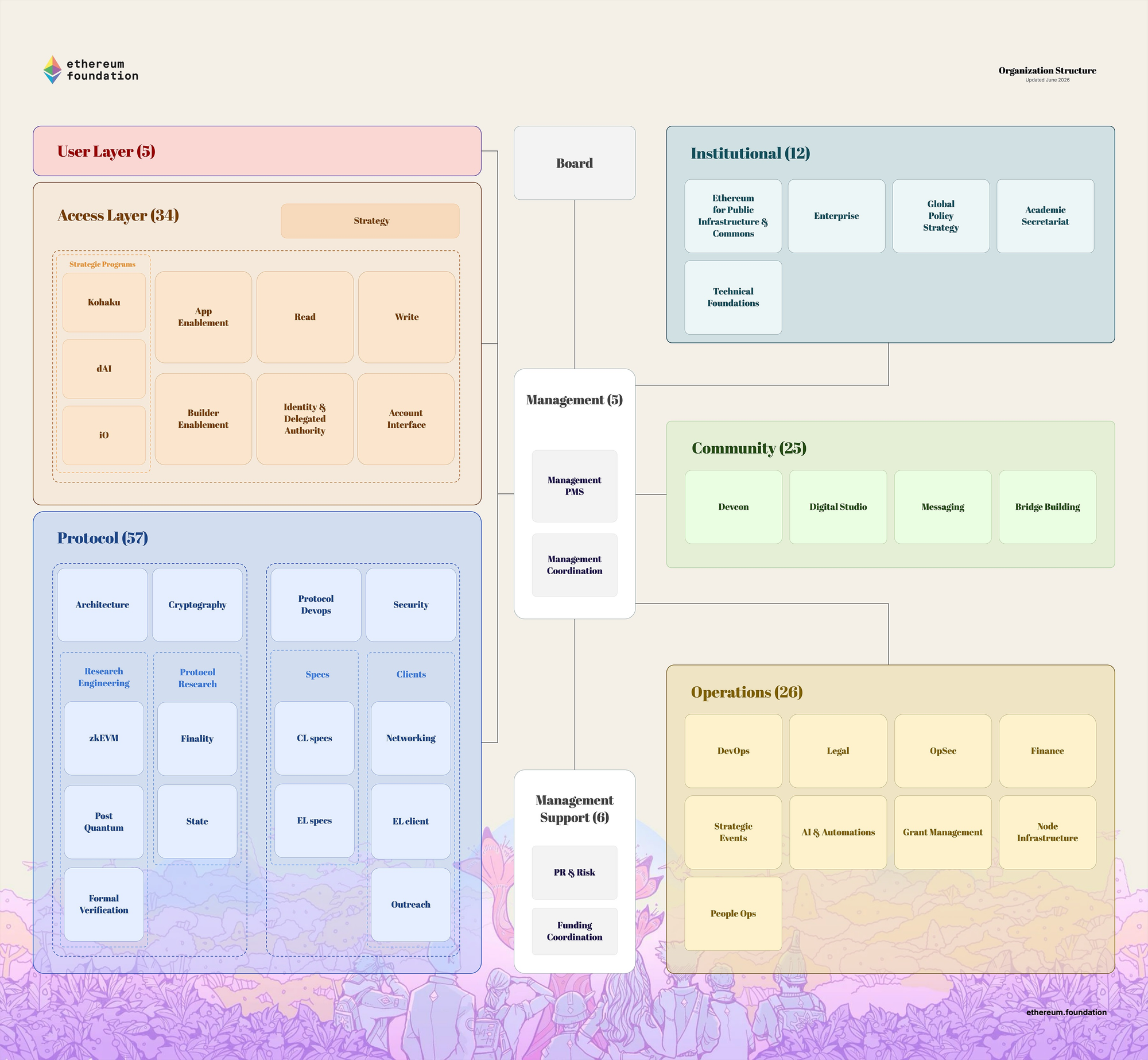
The people who believed in the work it left behind are building independent homes for it. Nine senior people have departed since January, and some launched new organizations within days of leaving: Ethlabs for protocol research, Ethereum Institutional for banks and governments.
ENS is pulling in the opposite direction. ENS runs Ethereum's naming system (it's what turns a long wallet address into a readable name like yourname.eth), and it's governed by a DAO, a community of token holders who vote on decisions.
the ENS DAO drama - neutral rundown 🧵
— owockai (@owocki) July 5, 2026
one of ethereum's best-known products is having a rough governance month.
here's what happened, and who's on each side. 👇
(i wrote this for myself, so i could stoicly understand all sides before considering taking a position myself.…
A proposal to move operations and treasury strategy from the DAO to the ENS Foundation set off weeks of conflict. Then, founder Nick Johnson used roughly half the active voting supply to veto the renewal of the DAO's own Security Council.
Five years of token voting produced delegate fatigue, low turnout, and a system where one wallet can override everyone else.
One institution is giving power away. Another is taking it back. Both in the same month, and both asking the question this whole space was built on: who can be trusted to hold power, and how much? 👀
No answers yet, but we're watching closely. And here are the other things we've been paying attention to this month. 👇
🌱 Featured: Building for Good with G$
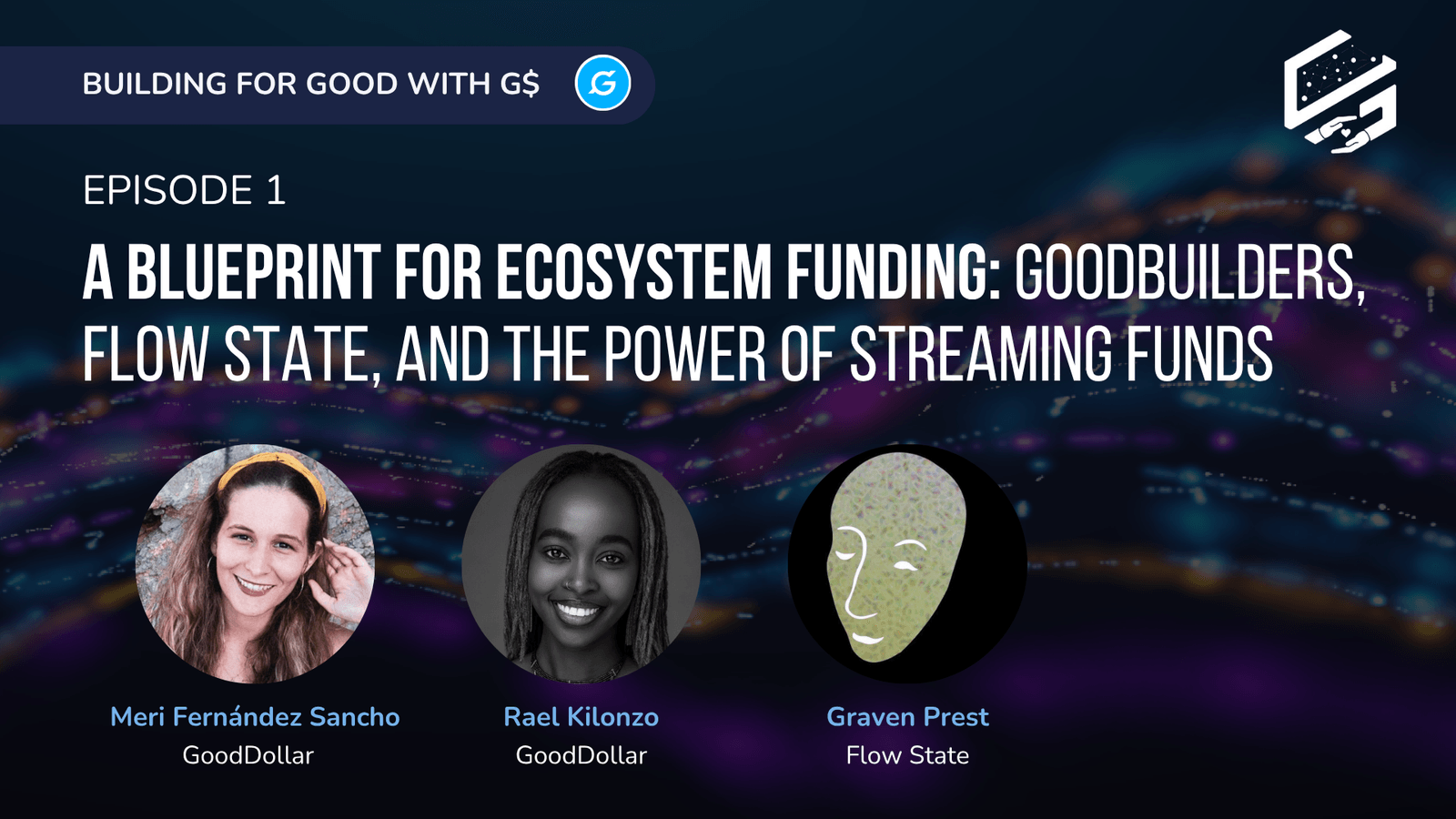
Remember last month when we said we were cooking up something with GoodDollar? Well, here it is. 🍳
This month, we launched Building for Good with G$, a new podcast series exploring the people, projects, and communities powering the GoodDollar ecosystem.
Episode 1 is live now. Drew sits down with the GoodDollar and Flow State teams to dig into the GoodBuilders program and its streaming funding model, where money flows to builders continuously instead of arriving as a one-time grant.
More episodes are on the way. If you're curious how a token becomes an economy, this series is for you. 💚
💡 Impact spotlight
Standing With Those Delivering Life-Saving Care in Ukraine
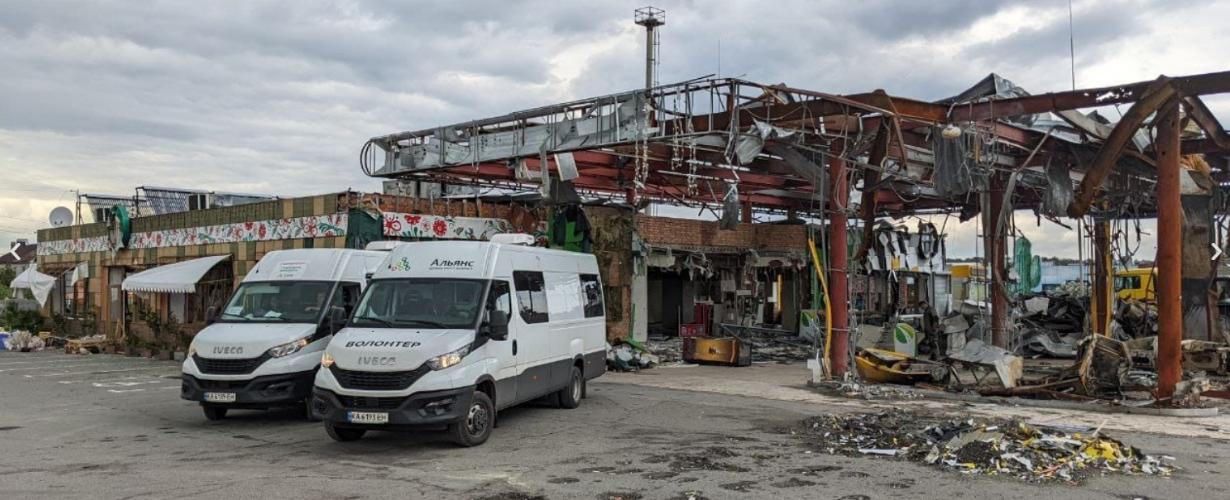
As you may know from previous updates, over the last 6 months we've been working alongside an incredible team at the Alliance for Public Health (APH), one of the largest NGOs in Ukraine. They provide essential HIV/AIDS and other public health services, and run a network of mobile clinics that bring lifesaving care to people who would otherwise go without.
Lately, the news out of Ukraine has been devastating: near-nightly strikes, many of them hitting civilian infrastructure. In one recent case, an attack destroyed a Red Cross warehouse along with 320,000 humanitarian relief items and pieces of equipment.
With the situation growing more dire, we asked our friends at APH to share a few words about what they're facing on the ground, and how you can support their work through crypto and fiat donations.
As Russian missiles and drones tear through Ukrainian cities night after night, killing civilians and destroying the infrastructure whole communities depend on, the human cost runs far deeper than the headlines. Behind every strike are people: families displaced, veterans trying to rebuild their lives, communities cut off from basic care. The Alliance for Public Health (APH), one of Ukraine's largest NGOs with 25 years of frontline experience, is there when it matters most.
Since December 2022, APH's mobile clinics have reached over 500 remote frontline locations across five oblasts, often providing the only source of care for the people who live there. For veterans and civilians disabled by the war, APH's HAB Centre in Lviv, which is Ukraine's first inclusive habilitation facility, has helped more than 800 veterans regain their independence. The Touchpoint program gives Ukrainians who lost their sight in combat a path back to mobility, digital literacy, and dignity.
The need is urgent, and Ukraine's health system cannot wait. Your support can mean the difference between isolation and recovery, between a preventable death and a life saved.
💚 Donate now through Endaoment
🌍 Donate now through GlobalGiving
Ecosystem developments 🚀
- Octant Wraps Up Epoch 12, Allocating Nearly 88 ETH to 25 Public Goods Projects: This round was Octant's most open yet, letting anyone contribute ETH to the projects they believe in for the first time. We were proud to be one of the 25 projects participating.
- LATAM Developers Unite for Build4Venezuela Hackathon After Devastating Earthquakes: Just two days after two powerful earthquakes struck Venezuela, developers across Latin America launched a 72-hour online hackathon, building dozens of free tools to help reunite families, coordinate aid, and map urgent needs on the ground.
- Vitalik Buterin Unveils "Lean Ethereum" Roadmap for the Network's Next Era: Ethereum's co-founder shares his vision for the years ahead, promising a simpler, more private network that's ready for whatever the future throws at it.
- UNESCO Launches an Open Science Platform Built Entirely on Open Source: Unveiled during UN Open Source Week in New York, the free platform makes UNESCO-supported research openly accessible to everyone, a step toward treating scientific knowledge as a global public good.
- Mercy Corps Ventures Pilots AI Climate Alerts Paired With Emergency Loans for Small Businesses in Kenya: Climate shocks quickly become financial shocks for small businesses, so this new pilot tests whether AI-powered early warnings combined with quick access to emergency funds can help entrepreneurs prepare earlier and recover faster.
- Stellar Previews Confidential Tokens, Bringing Privacy to Onchain Payments: The network known for powering humanitarian payments is testing a way to keep transaction amounts private, a feature that matters for everything from payroll to protecting vulnerable aid recipients.
- Hats Protocol Becomes a Public Good as Haberdasher Labs Winds Down: The team behind the onchain roles and permissions tool is closing up shop, but the protocol lives on. The full stack is now open source, and anyone can keep using it, fork it, or build on it.
- Over 15,000 Smallholder Farms in India Registered on Cardano: Project Swaminathan, run with Syngenta Foundation India, anchors satellite-verified land records and sustainability data onchain, creating trusted records that can help small farmers access credit, crop insurance, and better markets.
- Anthropic Launches Claude Corps, a $150M Program Placing 1,000 Fellows at Nonprofits: Early-career fellows will spend a fully funded year embedded inside 300+ US nonprofits, from food banks to refugee support programs, building AI tools that help these organizations expand their impact.
- New Ethereum Proposal Would Let Validators Fund Public Goods Together: The idea tackles a classic problem where everyone benefits from shared infrastructure, but nobody wants to pay for it alone, by letting those who secure Ethereum collectively vote to redirect up to 10% of their rewards toward ecosystem funding.
- Karma Launches Free AI Agents That Help Nonprofits Find Funders in Seconds: The new tool lets fundraisers search over 2 million IRS filings in plain English, right inside Claude or ChatGPT, turning hours of digging through foundation PDFs into a quick conversation with cited results.
- Gitcoin Shares Its Theory of Change for Helping Workers Displaced by AI: The team's latest reboot update outlines a plan for a local-first platform that helps people who've lost work to AI find real-world community, local jobs, and mutual support, starting with a pilot in a single city.
- Over 140 Companies Back OUSD, a New Stablecoin Built as Shared Infrastructure: Fierce competitors like Visa, Mastercard, Stripe, and Google are teaming up behind Open USD, a stablecoin designed to belong to no one and work for everyone, much like email or the internet itself.
Crypto Altruists content & updates 💚
- 🎙️ Crypto Altruists Episode 255: Separating Hype from Hope: A solo episode on how AI is running crypto's hype playbook, and a pragmatic case for managing the noise, mitigating harm, and protecting the genuinely good stuff so it has a chance to grow.
- 🎙️ Crypto Altruists Episode 256: Blockchain for Good Meets Hunger Relief: Martin Simms and Aaron Rafferty of WYDE on how their "Impact Exchange" turns everyday trading into funded meals, and their partnership with Feed the Children to fight hunger with blockchain.
- 📊 Infographic: 10 Ways DeSci Is Transforming Scientific Research: From community-governed funding to researcher-owned IP and open access, a look at how Decentralized Science is reshaping how research gets funded, owned, and shared.
- ✍️ 5 Ways the United Nations Is Embracing Cryptocurrency and Blockchain: From UNICEF's CryptoFund to WFP's Building Blocks moving $760M+ in aid, a freshly updated look at how the UN went from cautious experiments to blockchain at scale.
- 🎙️ Crypto Altruists Episode 257: Technology Is Not Destiny: Erik Balsbaugh and Carole House of Open Frontier on building AI and crypto for everyone, not just the powerful, and why the future depends on who's at the table when these systems are designed.
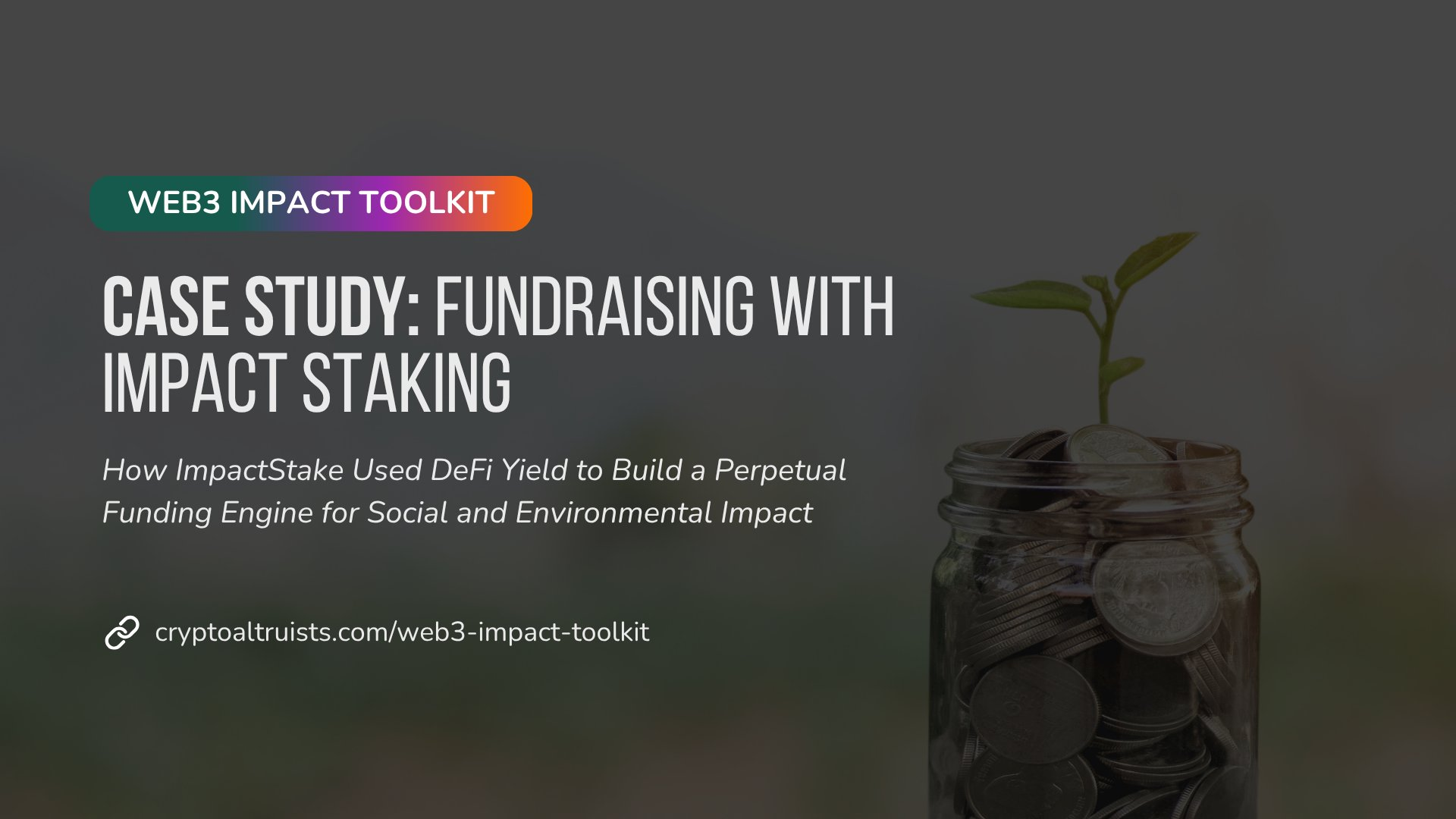
- 📚 Case Study: Fundraising with Impact Staking: How ImpactStake turns staking yield into a perpetual funding engine for impact, planting trees & powering community economies without donors ever giving up their principal.
Insightful resources 📖
- Ethereum Basics for Governments and Institutions: A non-technical primer from the Ethereum Foundation to help policymakers and institutional leaders understand how Ethereum works, how it's governed, and what sets it apart as neutral public infrastructure.
- AI Systems as Digital Public Goods: A new UN University report on why so few AI systems truly qualify as digital public goods, and what needs to change in standards, accountability, financing, and equity to get there.
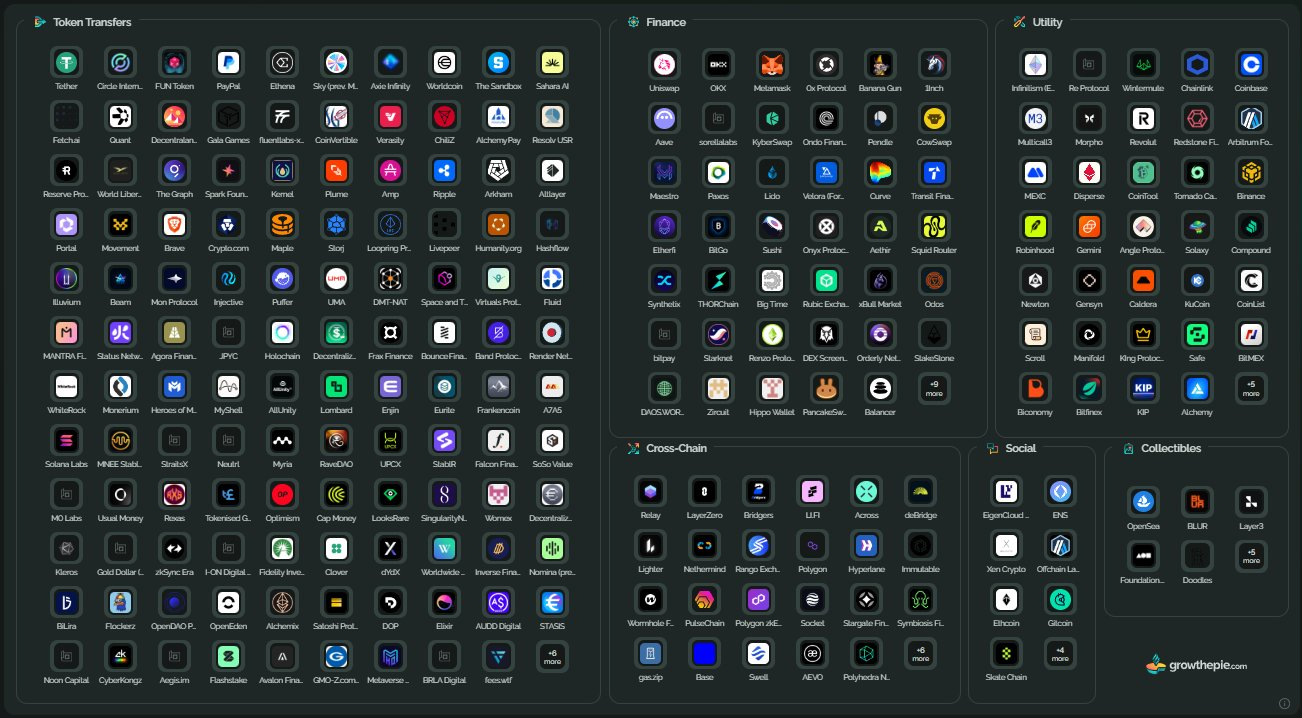
- Why Ethereum Is Built to Be Used: A quick visual breakdown from growthepie on what makes Ethereum ready for everyday use. 👇
🌟 Project highlight: Ma Earth
If there's one question at the heart of what we care about, it's this: Can web3 get resources to the people doing good work on the ground? Ma Earth is one of the best answers we've seen lately.
Ma Earth is a collective funding platform for community-led regeneration. They connect land stewards, from regenerative farmers to forest conservationists to watershed restorers, with funding that would otherwise never reach them.
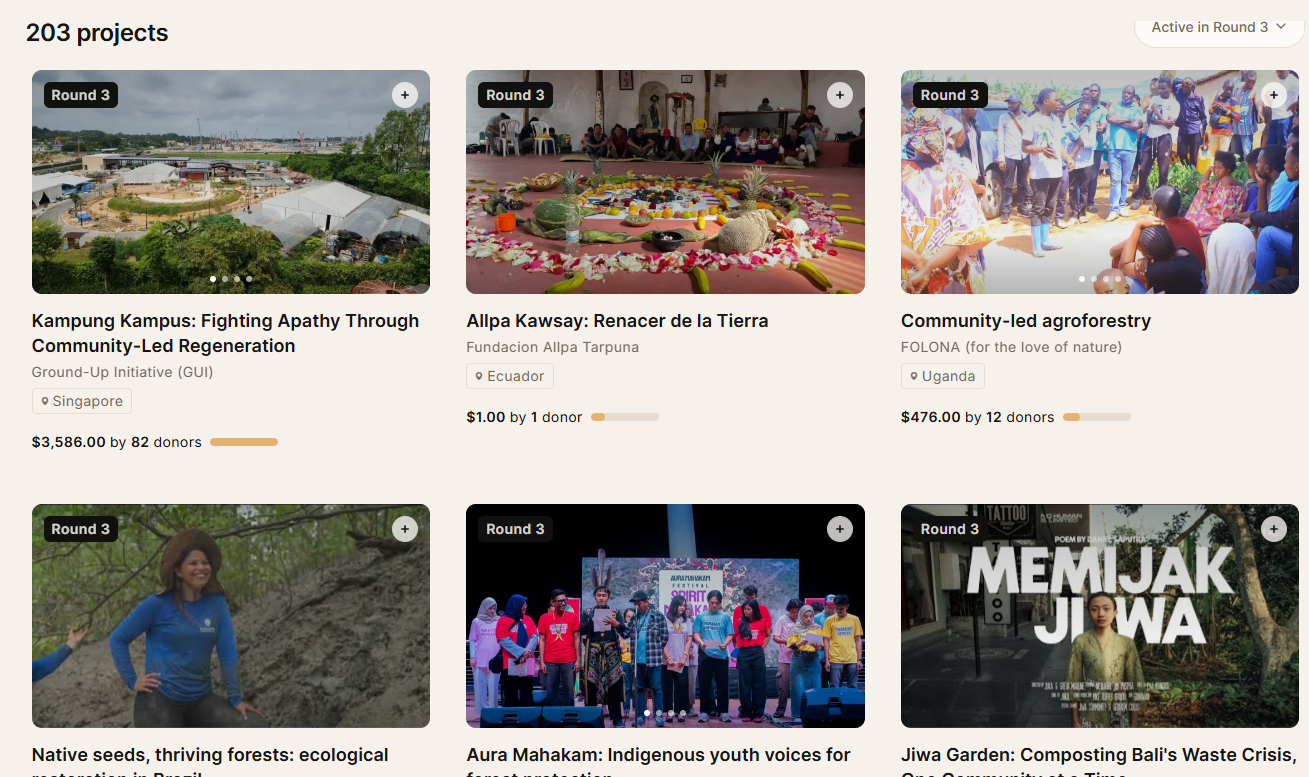
Right now, they're running Round 3, their biggest funding round yet: $1 million in matching funds for 150+ projects across 60+ countries, selected from over 800 applications. Donations are open through July 21.
The matching works through quadratic funding. The more individual supporters a project has, the more it receives from the pool, regardless of donation size. A $10 gift can unlock $30 to $50 in matching funds, and the platform takes zero fees.
One detail we appreciate: Ma Earth's first two rounds ran fully on crypto, and it was rough. The team spent hours walking farmers in Cameroon through wallets, seed phrases, and gas fees, and the most requested feature was simply credit cards.
So for Round 3, they built their own platform that accepts them. Behind the scenes, it still uses web3 infrastructure. Together with Hypercerts, they built an open data layer where each project's records, endorsements, and impact reports are owned by the project itself and can even travel to other funding platforms.
Definitely one to watch, and to support if you can. 🌱💸
💡 Bring web3 into your nonprofit's mission
Crypto Altruists works with nonprofits, foundations, and impact teams that want to understand if blockchain is useful for their work. We help with things like crypto donations, transparency tools, and practical web3 experiments.
Our consulting and workshops are hands-on, clear, and tailored to your reality. Book a call if you want to explore what makes sense for your work. 🤝
💸 Send a tip in ETH: cryptoaltruists.eth
🤝 Send a tip in BTC, SOL, and other tokens
☕ Buy us a coffee
📬 Stay connected
Subscribe to get Crypto Altruists content delivered directly to your inbox every month. If you'd like to share any feedback or ideas, you can always reach us at partnerships@cryptoaltruists.com & via the social media platforms below!
Twitter | LinkedIn | Bluesky | Instagram | YouTube | Farcaster |Podcast
See you in the next edition! 💚