September Edition of the Crypto Altruists Newsletter
👋Hello, Crypto Altruists!
When people say big institutions moved into crypto this year, they usually mean Wall Street: the banks, the ETFs, the tokenized funds.
But there's another set of institutions we've been watching, and pointing to something that web3 has struggled to show for years: impact use cases solid enough that a cautious organization would bet on them.
Lately, more of those have been emerging. For example, in July, the UN Development Programme signed a deal with Stellar to take blockchain payments from a handful of pilots to a permanent tool across its country offices. The head of UNDP's finance lab put the goal plainly: make the technology "ordinary," something a country office reaches for without thinking of it as an experiment.
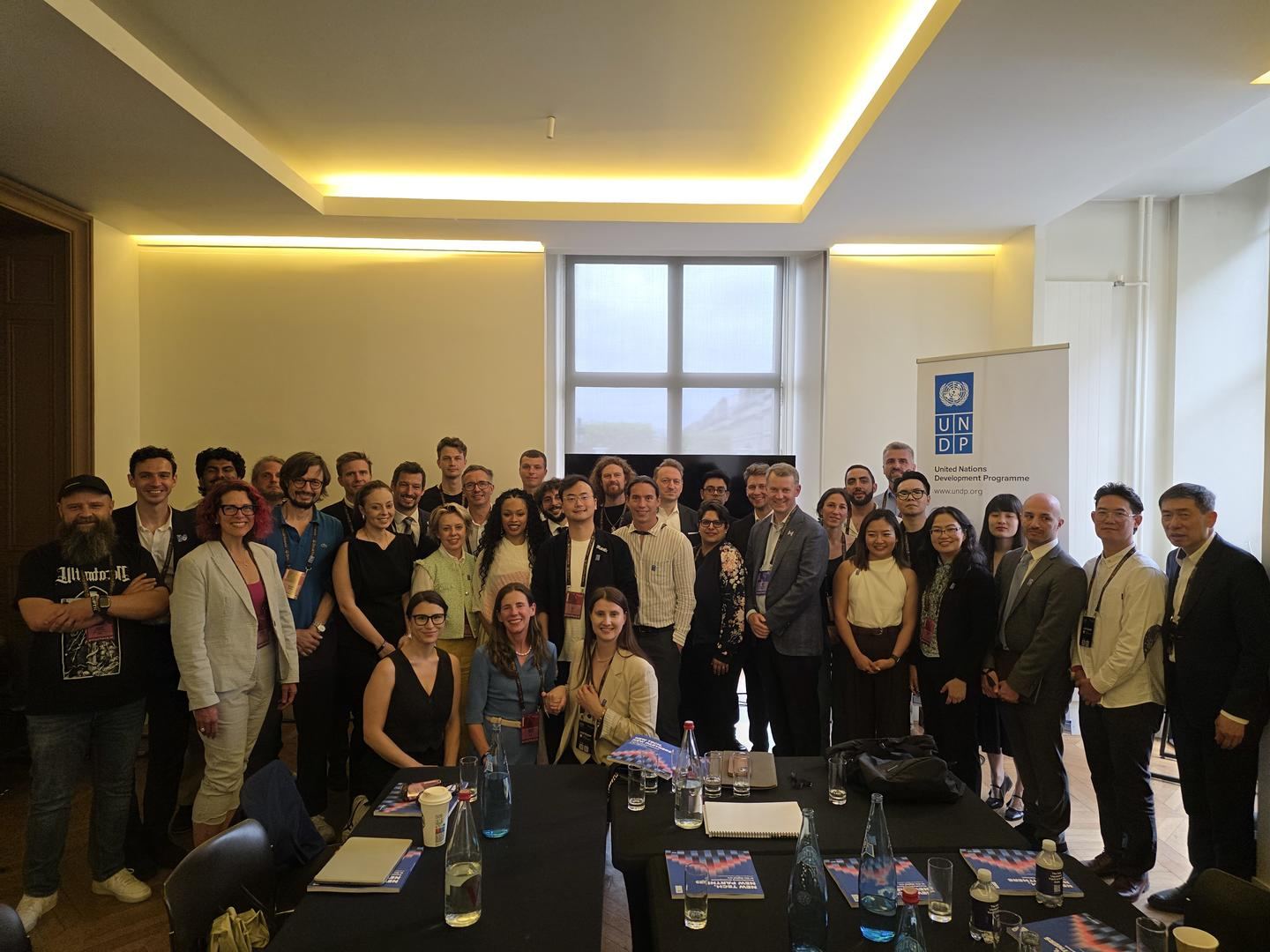
This follows the success of many different initiatives, such as a pilot in Aleppo that had cut the costs of distributing aid from around 10% of funds to 2%, as well as others in Kenya and Haiti (where everything kept running even through a full mobile network outage!).
And it's not just UNDP; the World Food Programme now moves aid to millions through the "Building Blocks" platform. UNICEF holds and grants digital assets through its CryptoFund. Mercy Corps Ventures has run pilots across Kenya, Haiti, and Colombia. UNHCR sends stablecoins to Ukrainian refugees, and has reached over 625,000 returnees in Afghanistan through HesabPay's blockchain wallets.
Congratulations to @HesabPay_ on hitting the milestone of 1 million users.
— Algorand Foundation (@AlgoFoundation) July 23, 2026
That's 1 million unique users, all transactions on Algorand, to make P2P money transfers, to pay electricity bills, to pay for groceries, and more.
HesabPay continues to grow every day, with more and… pic.twitter.com/3pjb3Fuhx3
Even the Cardano Foundation's CEO, Frederik Gregaard, made the case in Forbes this month, using the example of farmers in Zambia building financial histories onchain. He made it clear: blockchain does its best work when you stop noticing it, like roads or water pipes. Not the disruption the early manifestos promised, but something that these organizations are now treating as plumbing.
If you haven't listened to it yet, we made a whole episode on why the UN went all in, and what nonprofits can take from it.
Here's what we've been paying attention to this month. 👇
🌱 Featured: We're live on Artizen!
Artizen is a funding platform for projects in art, science, technology, and culture. To take part, you make an Artifact: a $10 open-edition collectible that represents what your project is about. Every sale goes straight to the creator and unlocks match funding on top.
So we made one. And we had a lot of fun with it. It's a seedling, built entirely out of this community. Can you spot the symbolism? 👀
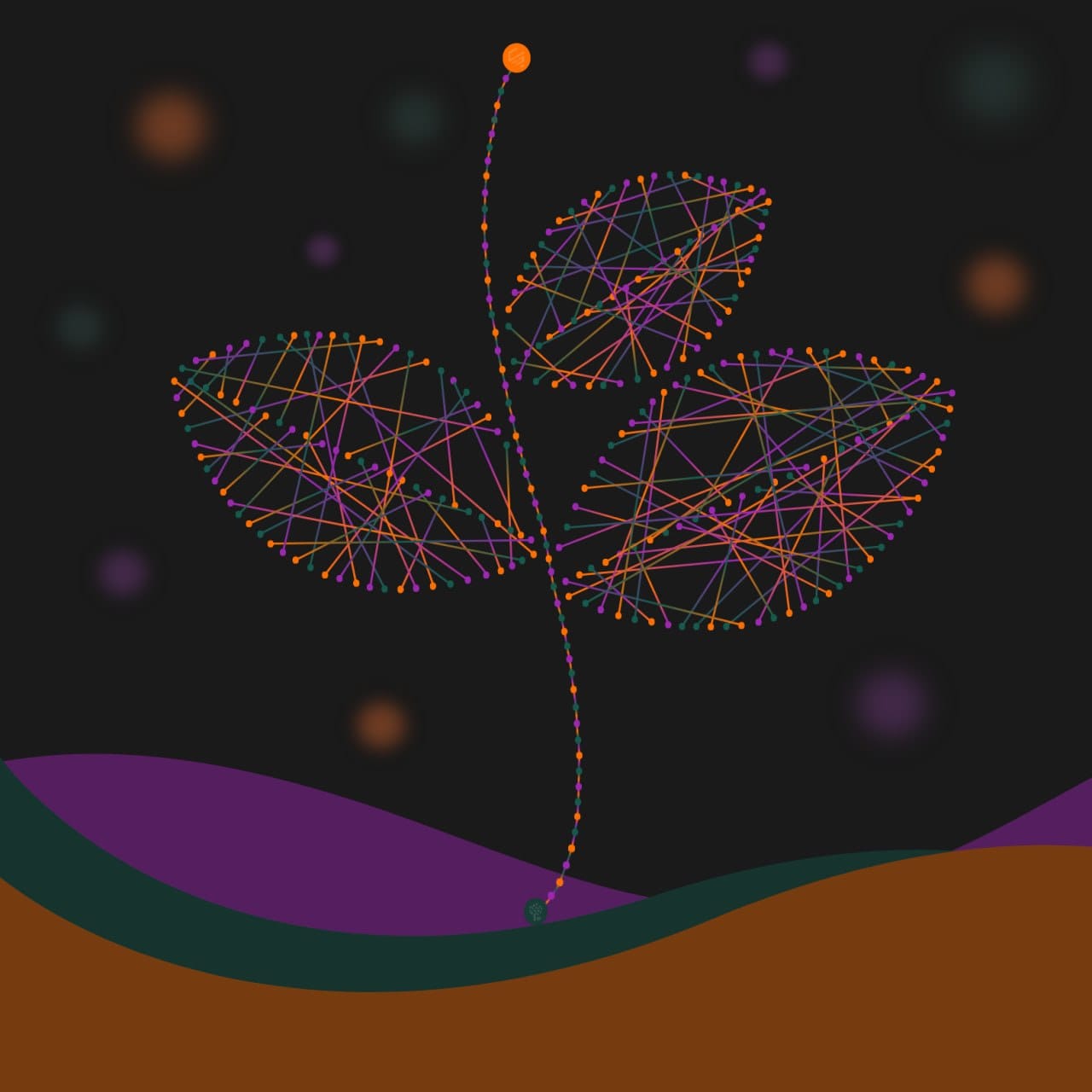
Every dot in the leaves is one of our 295 episodes. Every thread connects to one of the 170 countries our listeners tune in from. The soft lights behind it are the subjects we cover, and the layers of soil are what we make: the podcast, the writing, and the toolkit. The path rising from root to bud is our own story, from Crypto Altruism in 2021 to Crypto Altruists today.
We're also hoping to get curated into more Funds over the coming weeks, which would multiply what each contribution is worth. If you've been reading this for a while and want to back the work, here's a good way to do it. 💚
Ecosystem developments 🚀
- Anonymous Donor Gives Over $8M in USDT to 19 Nonprofits: Made through The Giving Block in a matter of days, the gift went to organizations working on hunger relief, global health, humanitarian aid, and children and families.
- Governance Researchers Start Mapping What DAOs Have Learned: Over 40 people joined a call to build a shared map of live governance experiments, prompted by Metagov's argument that most lessons from the first wave of DAOs were never tested rigorously enough to count as evidence.
- Ripple, Solana, and Polygon Mobilize for Nepal Flood Relief: After flash floods affected 65,000 people in late August, Ripple gave $300,000 to World Central Kitchen and Mercy Corps, Solana auctioned its logo space to raise nearly $167,000, and Polygon opened a crypto donation channel to the government's disaster relief fund.
- HRF Grants Over 500 Million Satoshis to 16 Freedom Tech Projects: The round backs mobile money bridges in Zambia and Nigeria, offline payments for Jamaica, and encrypted messaging tools built for journalists and activists living under authoritarian rule.
- Valley of the Commons Ran Four Weeks in the Austrian Alps: Around 60 people lived together in Höllental to test commons economics, local production, decentralized and shared governance in practice, with sessions recorded along the way.
- New Cookbook Published on How to Exit to Community: Built on 14 real decentralization processes, the free guide covers the transition designs, legal structures, and traps involved in moving governance from founders to the communities that give a project its value.
- Endaoment Publishes a Refresher on How Its Donor-Advised Funds Work: The post walks through how the charity accepts gifts of stock, property, and digital assets, reviews grant recommendations, and uses a public transaction record so donors can follow where the money goes.
- Cosmos Institute Funds 80 Projects Building AI That Serves People: Grantees across sixteen countries are building AI aimed at human autonomy and truth-seeking rather than replacing people.
- Tor Project and Funding the Commons Share Results From Their Internet Freedom Round: The quadratic funding round moved $201,481 to ten internet-freedom projects, with donations accepted in five currencies, no identity checks, and funds paid straight into each project's wallet.
- Octant's Privacy Round Heads Into Its Allocation Window: Epoch 13 puts a 100 ETH matching pool behind projects working on privacy for Ethereum and the open internet, with the community deciding where it goes between October 14 and 21.
Crypto Altruists content & updates 💚
- 🎙️ Crypto Altruists Episode 263: Innovation for Everyone: James Newell of the GSR Foundation on directing Ethereum staking yield to partners like UNICEF and Mercy Corps Ventures, and why he stays honest with nonprofits about what blockchain cannot fix.
- 🎙️ Crypto Altruists Episode 264: Crypto for Ukraine: A solo episode tracing the arc from a government posting wallet addresses on Twitter to UNHCR delivering stablecoin aid on Stellar, including an honest look at the scams and volatility along the way.
- 🎙️ Crypto Altruists Episode 265: Rebuilding Trust Online: Cooper Squirrell of UrVote and Veri explains zero-knowledge proofs in plain language, and makes the case that elections can be both fully private and independently auditable.
- 🎙️ Crypto Altruists Episode 266: Web3 Without the Complexity: A live workshop for the GoodBuilders community on five humanitarian projects that hid the blockchain entirely, and what their design choices suggest about reaching people at scale.
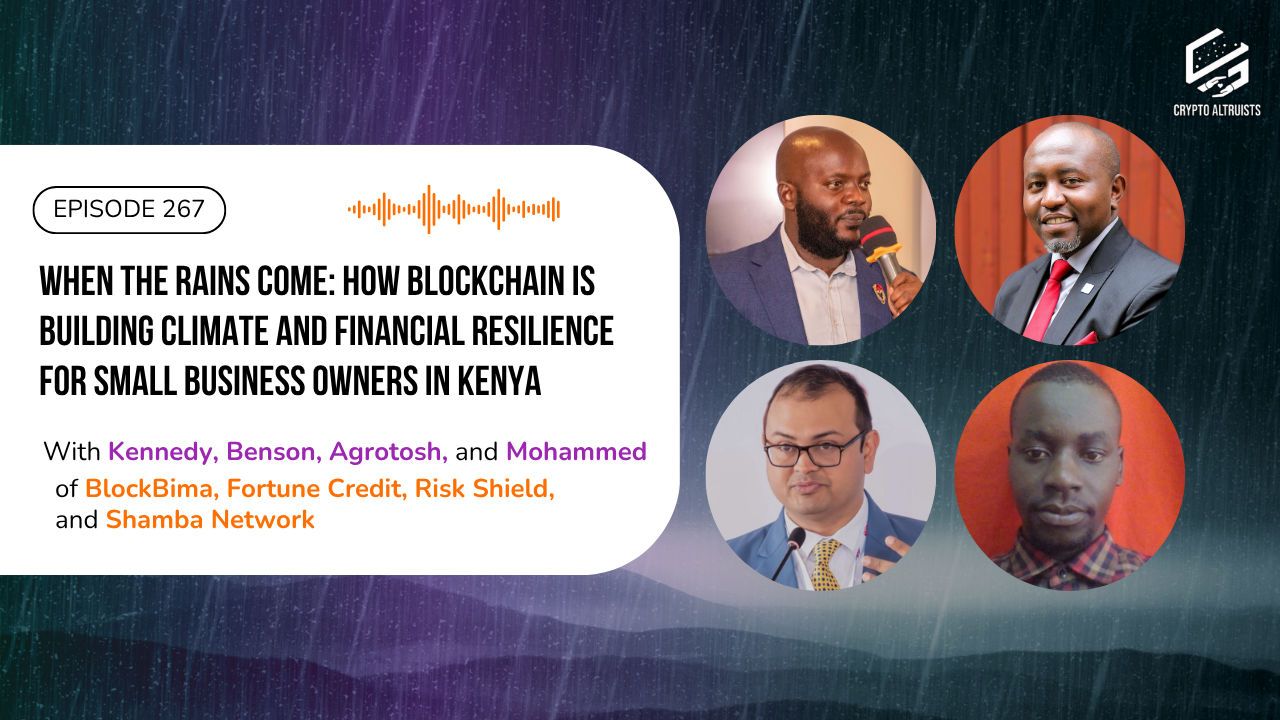
- 🎙️ Crypto Altruists Episode 267: When the Rains Come: The four teams behind the Kenya climate insurance pilot on cutting settlement from thirty days to one, and why the traders never had to know a blockchain was involved.
Insightful resources 📖
- An Amazonian Shaman on AI, Deforestation, and Other Ways of Knowing: Liv Boeree interviews Txana Tuwe, an elder of the Huni Kuin people, about technology arriving in the rainforest, what pressures his community faces, and what wisdom looks like from outside modern society.
- 88 Prompts for Long-Term Thinking: Kevin Kelly's axioms written for the Long Now Foundation, including the case for designing systems whose benefits arrive after everyone involved is gone.
- Octant-Funded Book on Navigating the Age of Machine Intelligence: Riley's Moving Through Transition makes the case for adventure, placemaking, and ritual as anchors in a time of technological upheaval, made possible by an Epoch 9 grant.
- The Strategic Grantseeker: A 2026-27 Playbook for Uncertain Times: A practical walkthrough of how to benchmark your organization against similar nonprofits, build a decision matrix for weighing funding opportunities, and stop spending time on grants that were never a good fit.
🌟 Project highlight: Gardens
Plenty of governance ideas in this space never leave the whitepaper. Gardens has been running in production for years, with more than 160 communities using it to make decisions and move money.
Them:
— gardens 🌱 (@gardens_fund) September 9, 2026
"...we've made the difficult decision to wind down operations..."
Us:
"gardens grows things 🌱"
We're here tending to our community-owned Gardens. https://t.co/J16CtWULBM pic.twitter.com/xRSnAQ4U20
Built by the 1Hive ecosystem, it runs on conviction voting. This means that instead of showing up for a vote that opens and closes in a fixed window, you put your support behind a proposal and it grows stronger the longer you leave it there. If you take your support away, it fades.
So the people who stick around and pay attention end up with more influence than someone who shows up at the last minute holding a lot of tokens.
That fixes two things DAOs keep getting wrong: votes that swing in the final hours, and a handful of large holders deciding everything.
Gardens also does streaming proposals, where money flows to contributors continuously for as long as the community keeps backing them, rather than arriving once and running out. GoodDollar, Bread Cooperative, Green Goods, and GreenPill all use it.
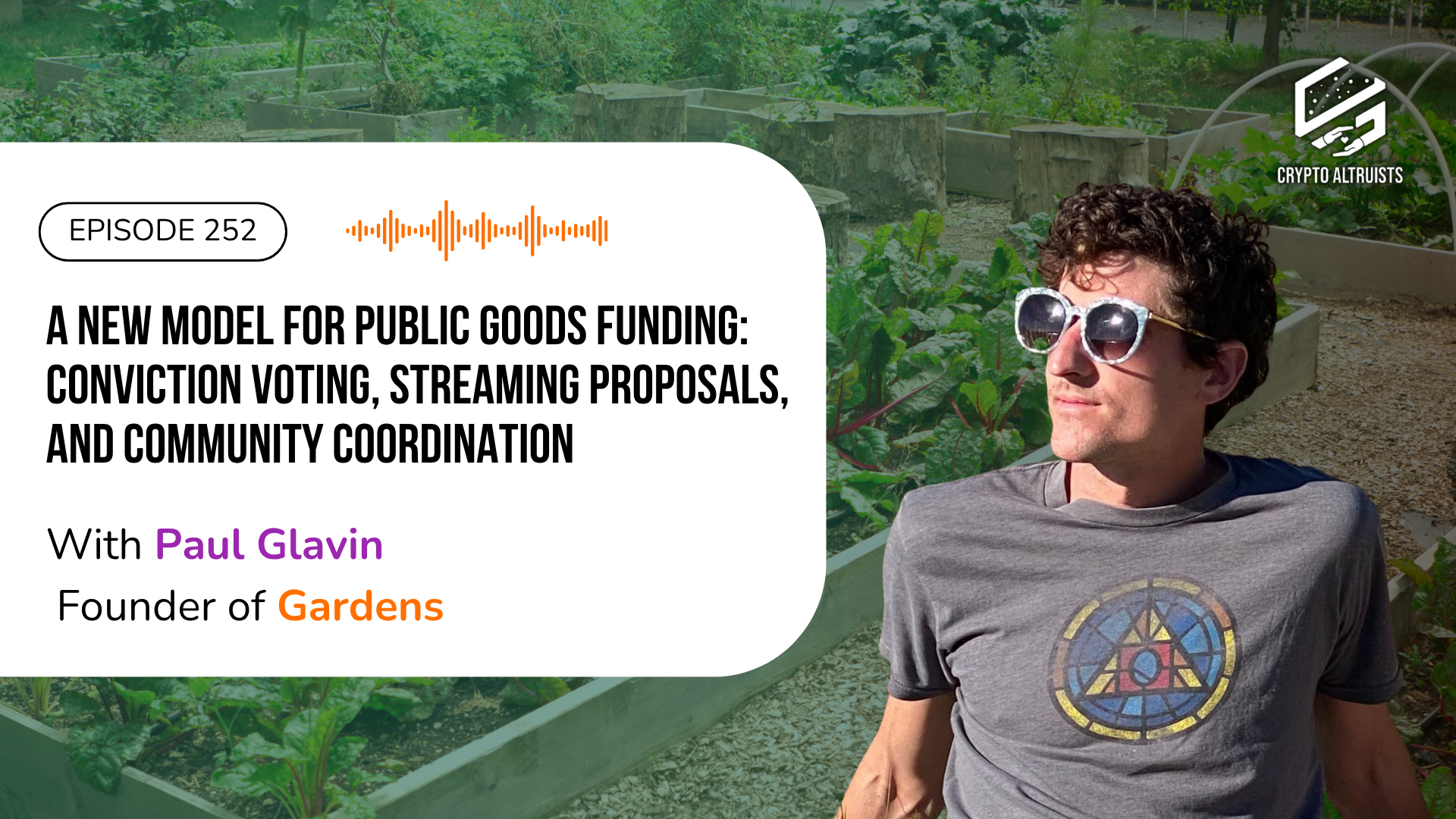
We sat down with Paul Glavin of Gardens on Episode 252 to talk through how it works, and what it takes to make governance something people want to show up for.
There's a thread running through this issue about communities figuring out how to govern themselves, from popup villages to DAO retrospectives to a privacy round deciding where 100 ETH goes. Gardens is one of the few places where that question gets answered by a system that's already running.
 Will Ruddick
💡 Bring web3 into your nonprofit's mission
Crypto Altruists works with nonprofits, foundations, and impact teams that want to understand if blockchain is useful for their work. We help with things like crypto donations, transparency tools, and practical web3 experiments.
Our consulting and workshops are hands-on, clear, and tailored to your reality. Book a call if you want to explore what makes sense for your work. 🤝
💸 Send a tip in ETH: cryptoaltruists.eth
🤝 Send a tip in BTC, SOL, and other tokens
☕ Buy us a coffee
📬 Stay connected
Subscribe to get Crypto Altruists content delivered directly to your inbox every month. If you'd like to share any feedback or ideas, you can always reach us at partnerships@cryptoaltruists.com & via the social media platforms below!
Twitter | LinkedIn | Bluesky | Instagram | YouTube | Podcast
See you in the next edition! 💚