February Edition of the Crypto Altruists Newsletter
👋Hello, Crypto Altruists!
It's been a disorienting few weeks in web3. Markets are down. Major events like NFT Paris & RWA Paris just canceled, citing the "prolonged crypto market downturn". Twitter is flooded with "Why I'm leaving crypto" posts. Layoffs are rolling in. And AI development is accelerating at a pace that feels both thrilling and a bit scary.
So naturally, we're asking the most fundamental questions: What is this technology actually for? What's worth building through a downturn? Are we still heading toward infrastructure that matters, or have we drifted somewhere else?
how it started how its going pic.twitter.com/ON9shCbcYE
— owocki (@owocki) February 8, 2026
We've been sitting with those questions too. What's kept us grounded: seeking out people and resources thinking through them honestly. Chris Dixon, for example, recently wrote about why non-financial crypto use cases need time and better rails, and why the long game matters. The Center for Humane Technology just published a piece asking what's at stake in preserving humanity as AI scales.
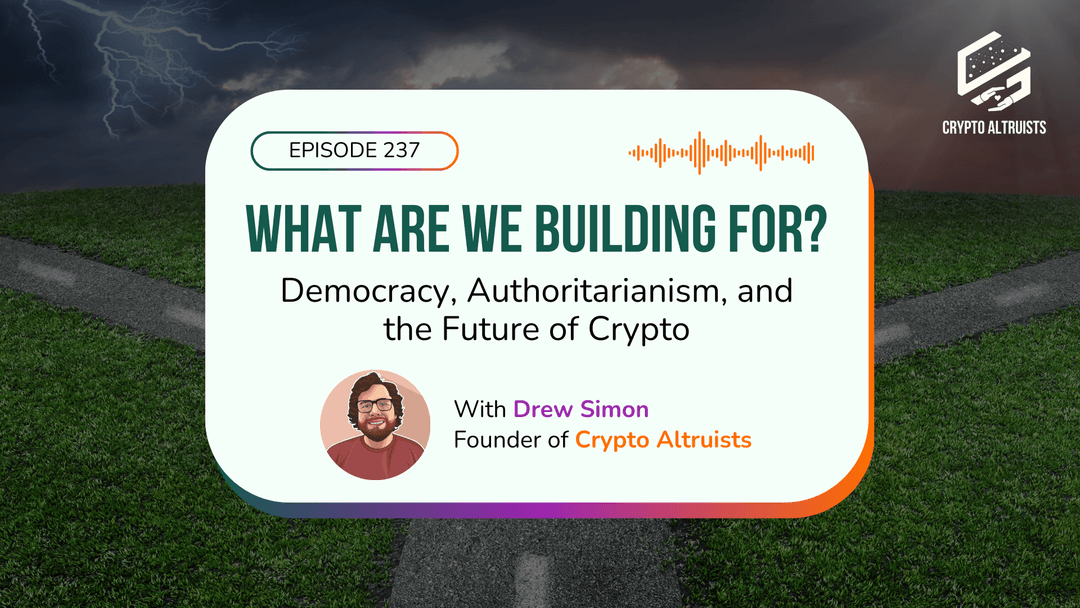
That same spirit of honest reflection is what led Drew to record a special solo episode. It's a frank look at where crypto has gone off track, what's genuinely at stake if we don't course-correct, and what it would take to refocus on infrastructure that supports democracy, transparency, and shared ownership instead of extraction.
And even in the midst of hard questions and necessary critique, we're seeing real reasons for hope: more sustainable business models emerging, regulatory frameworks that could actually protect builders and users, AI agents that might genuinely democratize access to crypto.
This is the conversation we're in right now, and we're glad to be in it with you.
👉 If you're still here, we want to hear from you. What's keeping you engaged? What still feels worth fixing, building, or protecting? We're collecting short reflections from the community and would love to amplify some with the broader community. Share your thoughts in the form here.
Now, let's dive into this month's updates... 👇
🌱 Featured: Our Solana Impact Guide is live
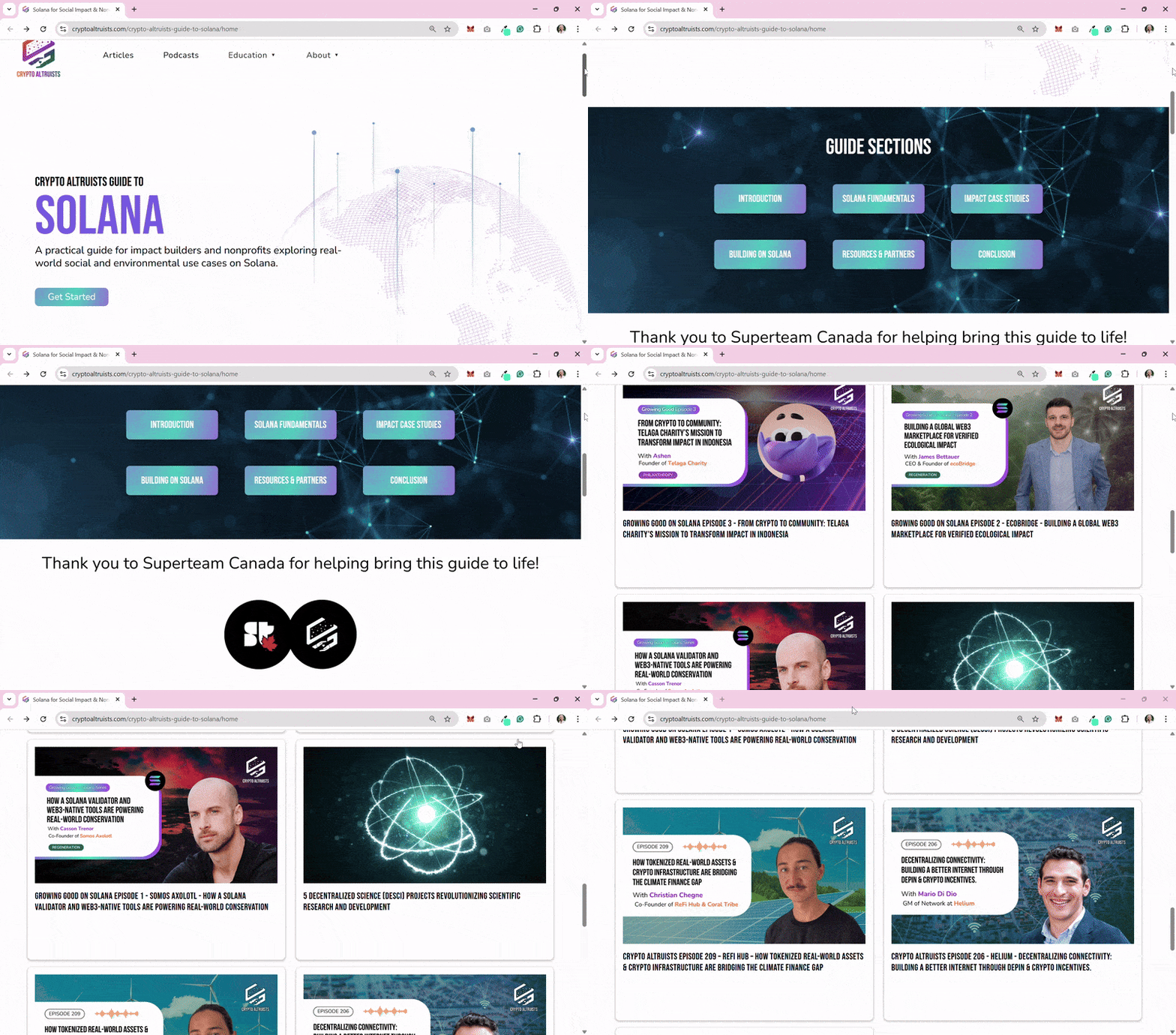
After months of research, conversations, and mapping the ecosystem, we’ve published the Crypto Altruists Guide to Solana. 🎉
This guide is part of our broader mission to understand what real-world impact actually looks like across different blockchain ecosystems and where specific tools genuinely make sense for social and environmental work.
Backed by a grant from Superteam Canada, the project began as a podcast series featuring three teams building tangible impact on Solana: Somos Axolotl, ecoBridge, and Telaga Charity. Those conversations became the foundation for a much deeper exploration of Solana’s infrastructure, use cases, and the people behind them.
As part of our mission to understand the multi-chain impact ecosystem, we set out to explore Solana: the use cases, tools, & builders creating impact 🌱
— Crypto Altruists (@Crypto_Altruism) January 22, 2026
We've distilled what we learned into the Crypto Altruists guide to Solana 👇https://t.co/msSBKvmJ34
Backed by a grant from… pic.twitter.com/9f9rIwMBcC
The guide brings together an overview of impact-focused tools, 11 real-world case studies across climate, science, philanthropy, and community finance, plus a practical directory of resources, partners, and communities.
Whether you are a builder, nonprofit, funder, or simply impact-curious, we hope it'll help you navigate Solana's impact ecosystem with clarity. 👇
💡 February impact spotlight
Ecosystem developments 🚀
- New York Times reports on crypto-powered aid delivery from Afghanistan: The article looks at HesabPay, an Afghan-built blockchain payments system used by Mercy Corps & UNHCR to deliver humanitarian aid in places such as Syria.
- Human.tech launches the Covenant of Humanistic Technologies: It outlines design principles for human-centric digital systems, focusing on digital rights by default, self-custody, and governance by design.
- OWN launches crypto-backed mortgages using DeFi protocols: OWN introduced a mortgage model backed by onchain collateral, combining Aave lending with ether.fi’s yield-bearing ETH to let borrowers retain staking rewards while financing real-world property.
- Octant begins migration to v2 with Epoch 11 as transition period: Octant is moving users from v1 to a new v2 app, with Epoch 11 designated as a migration epoch and no matching fund, requiring users to migrate to continue participating in future funding rounds.
- Vitalik Buterin calls for better, purpose-built DAOs: Ethereum’s co-founder argues DAOs should move beyond token-voting treasuries toward designs tailored to tasks like oracles and dispute resolution, with privacy and better governance tools as core requirements.
- Greenpill Dev Guild outlines 2026 “Regen Stack” strategy: The project lays out a plan to move from donation-based funding toward staking-powered public goods, using ETH staking, Octant vaults, and onchain impact verification to create a more sustainable funding loop for regenerative work.
- Gitcoin DAO requests $1M budget for 2026 comeback year: Gitcoin DAO submitted a budget proposal to its onchain governance, asking GTC token holders to fund operations & new experiments following a major internal reset.
- Mask Network becomes steward of Lens: The transition moves Lens (a decentralized social network built around user-owned profiles) from infrastructure development toward building usable consumer social apps.
- Stellar Development Foundation CEO shares takeaways from Davos: Denelle Dixon highlights financial services as blockchain’s clearest real-world use case, with privacy and trust still key gaps for institutional adoption.
- GoodDollar launches GoodBuilders Season 3: The 3-month program offers $50k+ in streamed funding, combining continuous capital with mentorship and community feedback to support teams building real-world UBI use cases on Celo.
- TheDAO returns with Ethereum security fund: TheDAO, which is best known for the 2016 hack that led to Ethereum’s hard fork, is reactivating over 75,000 ETH left unclaimed at the time, redirecting the funds toward a new Security Fund focused on strengthening Ethereum’s infrastructure.
- Geode Labs launches ETHStars Opportunity Board: The platform aggregates Ethereum jobs, grants, bounties, fellowships, and hackathons into a single hub.
- Gitcoin proposes yield-powered matching pilot with Octant: The proposal would deploy Gitcoin matching funds into Octant’s non-custodial vaults, using only generated yield (not principal) to fund future Gitcoin Grants, testing a more sustainable, capital-preserving model for public goods funding.
- Ethereum Documentary Launches on Alternate Platforms Following Amazon Setback: Vitalik: An Ethereum Story, was originally slated for release on Amazon Prime Video but was reportedly sidelined after a new policy restricting “crypto-related content” on the platform. The documentary is now available to stream on Tubi and YouTube Movies.
Crypto Altruists content & updates 💚
- 📝 5 practical tips for new Web3 social impact builders: Practical advice for nonprofits and builders on how to enter Web3 responsibly, from pacing and boundaries to collaboration and real-world impact.
- 📽️ KFM Talks™: “Decentralization Didn’t Start with Blockchains”: Crypto Altruists Founder Drew explores how decentralized coordination long predates Web3, drawing lessons from traditional and Indigenous models of governance. The talk makes the case for learning from communities that have practiced collective coordination for generations, and using technology to thoughtfully scale those principles today.
- 🎙️ Crypto Altruists Episode 234: Community-Governed Knowledge for the Open Internet: Yaniv Tal, CEO of Geo and co-founder of The Graph, discusses why coordination and governance are the real bottlenecks and how community-governed knowledge can help rebuild trust online.
- 🎙️ Crypto Altruists Episode 235: Funding Impact Without the Chaos: Mahesh Murthy (Karma) unpacks how onchain attestations, portable reputation, and better funding rails can bring accountability and clarity to Web3 grant programs.
- 📝 How blockchain is transforming disaster relief: Real-world case studies showing how crypto is delivering aid in active crises, from refugee payments and sanctions-constrained regions to anticipatory action pilots that release aid before disasters strike.
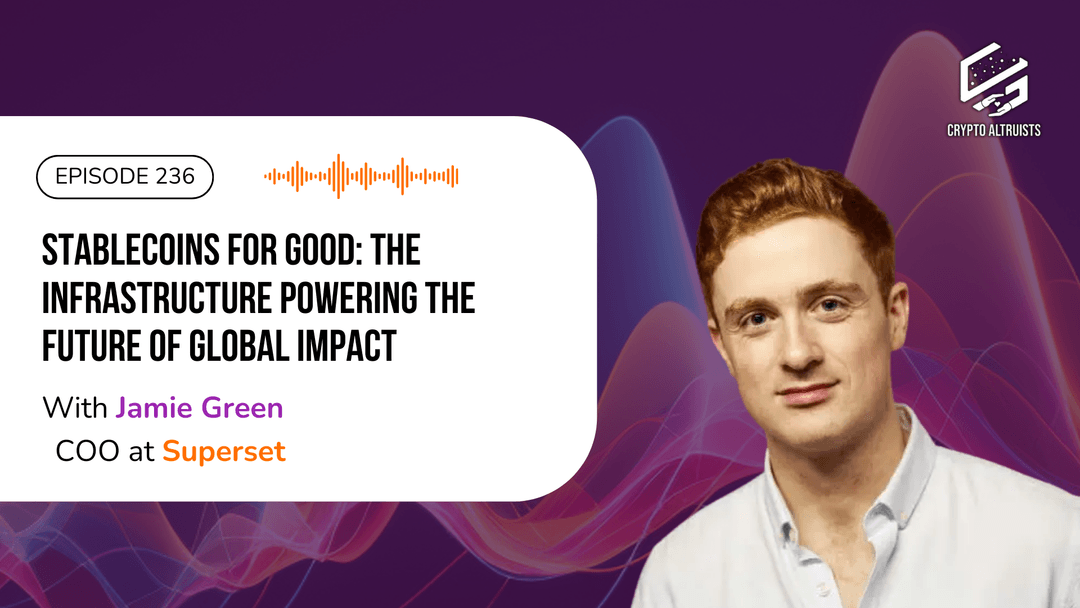
- 🎙️ Crypto Altruists Episode 236: Stablecoins for Good with Superset: Jamie Green explains why fragmented stablecoin liquidity limits real-world impact, and why “boring” infrastructure matters for humanitarian aid and global finance.
Insightful resources 📖
- Beneath Our Feet: a short film on regenerative futures: It combines perspectives from BioFi, Regen Foundation, and regenerative design thinkers to introduce bioregional approaches & invite deeper engagement.
- SEED Latam’s roadmap for the LATAM blockchain ecosystem (Spanish): A data-backed guide drawing on 25+ communities across 11 countries, mapping key adoption barriers and outlining practical steps to connect education, institutions, and regional coordination.
- The Experience: Web3 Tooling from the Ground Up: A concise, experience-based resource capturing how ReFi communities actually use—and struggle with—web3 tools in practice.
- Serious Thinking Has Gone Offline: A thoughtful essay by Sam Vuong framing IRL gatherings, dialogue, and reputation as emerging infrastructure for collective intelligence in an AI-saturated world.
- Claude’s Constitution by Anthropic: A look at how an AI system is governed, with clearly written principles for safety, privacy, and decision-making - useful as a reference point.
- A new Hypersocial essay by our friend Sam Flanagan: A thoughtful reflection on creative destruction, linking economic theory with lived experience to explore how letting things break can open space for more human-centered systems and ways of living.
- Art That Outlives Museums: When Network Becomes the Medium: A thoughtful guest essay by Natalie Stone exploring how Ethereum enables art made with a network, not just stored on it, reframing blockchains as living cultural infrastructure rather than digital ledgers.
- Active & Ongoing Web3 Grant Programs Builders Should Know About: In this curated list, Suraj Sharma highlights 14 active grant programs currently available to builders across a range of blockchain ecosystems, offering funding, mentorship, and infrastructure support for teams shipping impactful projects.
🌟 Project highlight: Mercy Corps Ventures
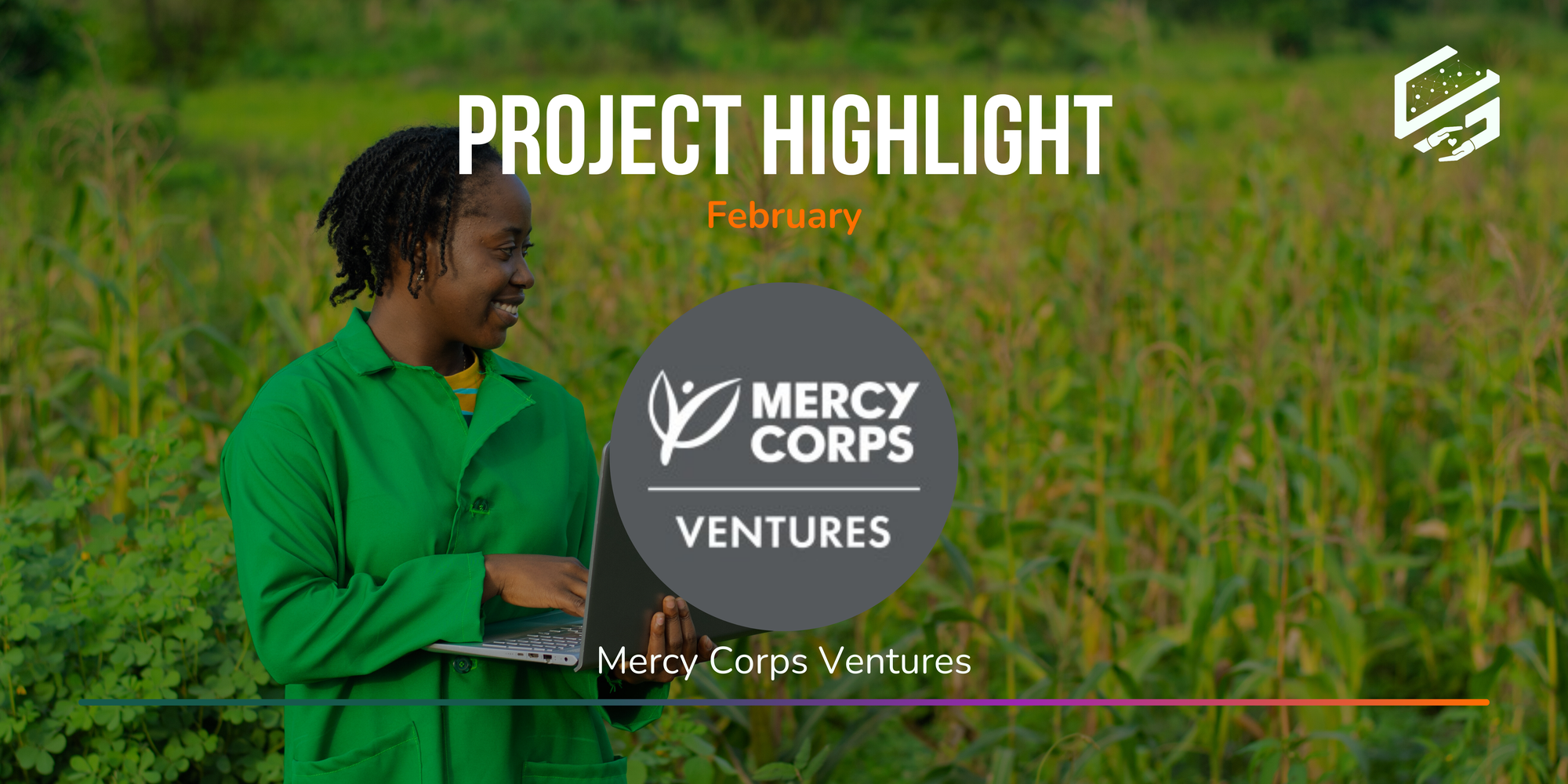
If there’s an organization doing the real, unglamorous work of testing whether web3 tools actually function under real-world constraints, it’s Mercy Corps Ventures (MCV).
They've just published their 2025 Impact Report, and it’s one of the clearest, most grounded looks we’ve seen at what holds up in practice once theory meets operating conditions. 🌍
As the venture arm of Mercy Corps, MCV invests early, stays close to founders, and runs pilots before scaling. Over the past decade, they’ve backed 61 early-stage companies, reaching 46.3 million people across 87 countries.
One recent investment is Bio Natural Solutions, a Peruvian biotech working on biological crop protection. 👇
 Astrid Insignares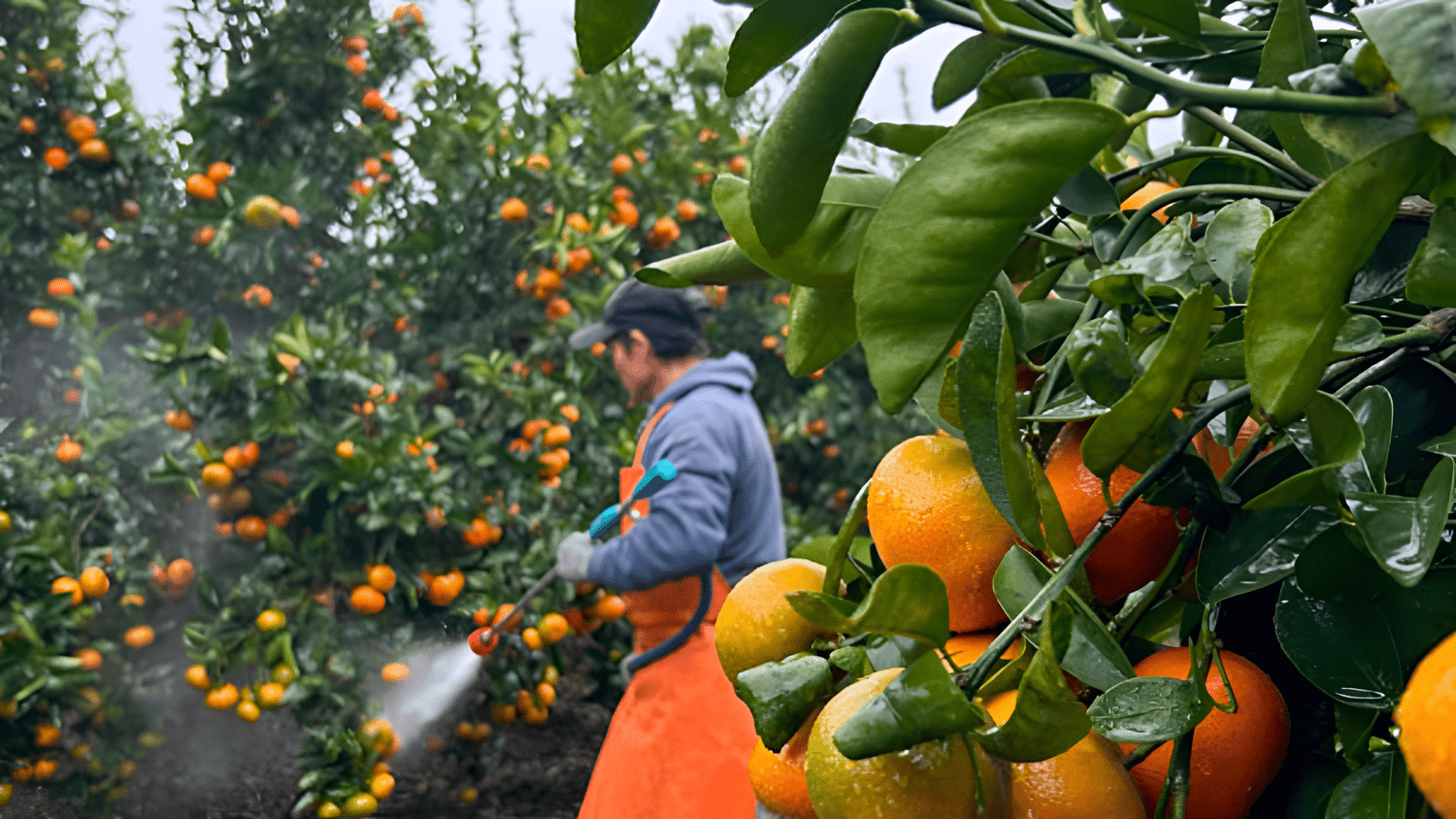
In 2025 alone, they made 7 new investments, supported 41 pilots, and helped portfolio companies raise $124M in follow-on capital. Across the fund’s life, 83% of portfolio companies have raised follow-on financing, a useful signal that these models can hold up beyond pilots.
After running 25+ crypto pilots since 2022, MCV has largely converged on stablecoins as one of the few blockchain tools delivering consistent value in the field:
- In Cameroon, stablecoin payments reduced cross-border fees for micro-merchants by 74%, moving over $5.1M in trade.
- In Northeast Syria, aid payments were delivered 96% faster and 60% cheaper, with full transaction traceability.
- In Afghanistan, stablecoin rails cut international transfer costs by 29% in a highly constrained banking environment.
For anyone tracking how web3 moves from experimentation into real-world use, Mercy Corps Ventures is doing work worth paying attention to.
💡 Bring web3 into your nonprofit's mission
Crypto Altruists works with nonprofits, foundations, and impact teams that want to understand if blockchain is useful for their work. We help with things like crypto donations, transparency tools, and practical web3 experiments.
Our consulting and workshops are hands-on, clear, and tailored to your reality. Book a call if you want to explore what makes sense for your work. 🤝
💸 Send a tip in ETH: cryptoaltruists.eth
🤝 Send a tip in BTC, SOL, and other tokens
☕ Buy us a coffee
📬 Stay connected
Subscribe to get Crypto Altruists content delivered directly to your inbox every month. If you'd like to share any feedback or ideas, you can always reach us at partnerships@cryptoaltruists.com & via the social media platforms below!
Twitter | LinkedIn | Bluesky | Instagram | YouTube | Farcaster |Podcast
See you in the next edition! 💚